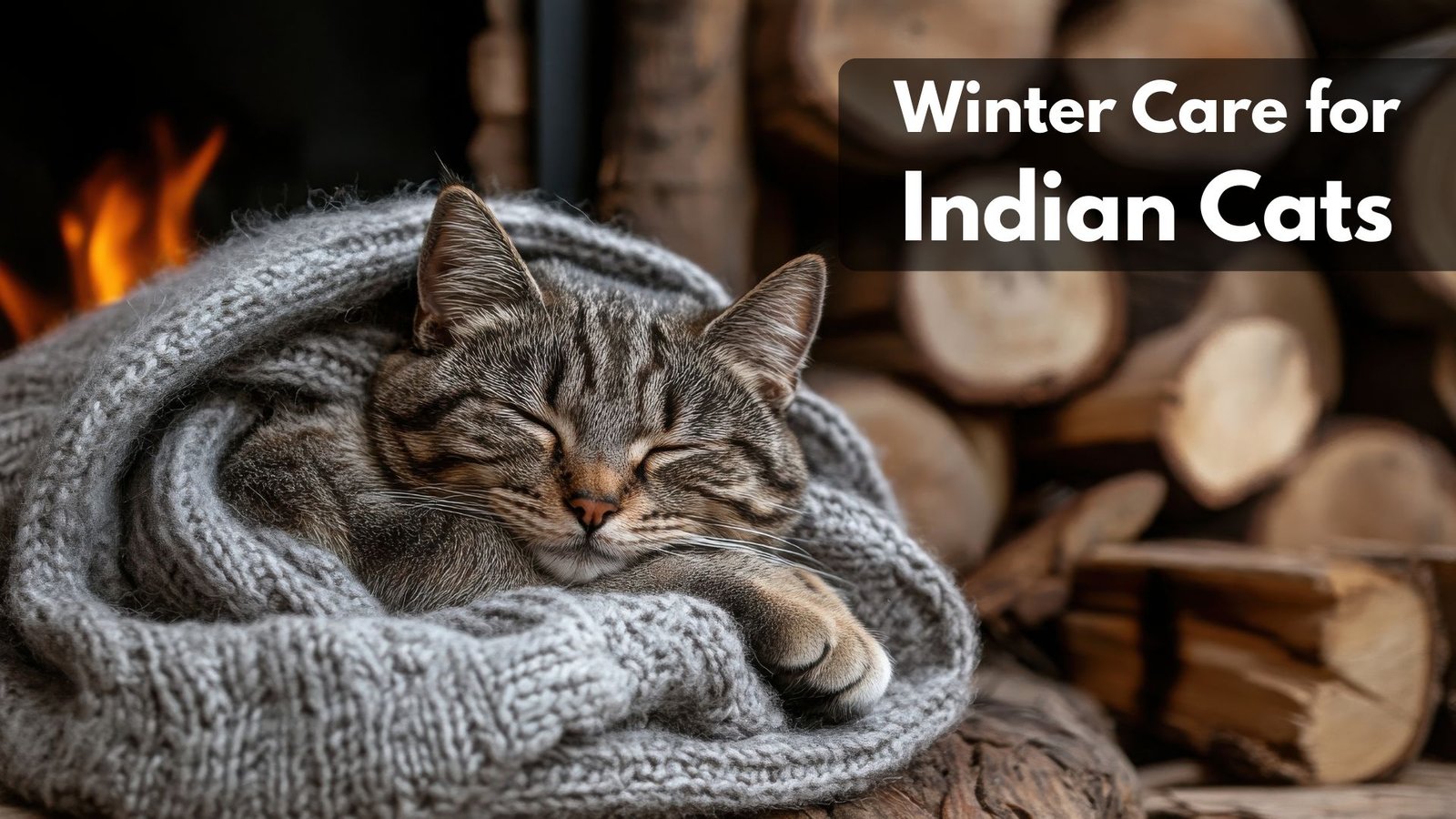
Indian winters bring three challenges: Cold (Arthritis flare-ups), Dehydration (Cats drink less water), and Hairballs (Winter coats shed). Solutions: Provide a warm bed (not on the floor), add warm bone broth to food for hydration, and brush daily to remove loose fur. Warning: Watch for shivering or hiding—signs of hypothermia.
Last Updated: Winter 2026
While you layer up in sweaters, your cat is probably looking for the warmest spot on your laptop.
Cats love warmth. Their ideal ambient temperature is higher than ours. In India, winter varies wildly—from the bone-chilling fog of Delhi to the pleasant breeze of Bangalore. But regardless of where you live, the drop in temperature brings specific health risks for cats: dehydration, joint pain, and dry skin. Here is your complete guide to keeping them safe.
1. The “Cold Floor” Effect: Managing Arthritis
If you have a senior cat (>7 years), winter is painful. Cold weather flares up arthritis.
- Elevate the Bed: Cold sinks to the floor. Place their bed on a chair or a raised platform.
- Heat Sources: A hot water bottle wrapped in a towel (never direct heat) tucked into their bed works wonders.
- Supplements: Ask your vet about Omega-3s or Glucosamine for joint support.
2. Hydration: The Silent Winter Danger
In winter, cats don’t feel thirsty. But the dry air dehydrates them rapidly, leading to Urinary Tract Infections (UTIs).
💧 The Winter Water Rule
Cold water = No thanks.
Cats hate ice-cold water. It hurts their sensitive teeth.
Hack: Serve warm water or warm broth. They are 3x more likely to drink it.

Winter Warmer: Purrkins Broth
Serve this creamy broth warm to encourage drinking. It hydrates and provides protein without the chill.
3. Skin & Coat: Fighting the Flakes
Dry air + Heaters = Dandruff. You might see white flakes on your cat’s fur.
- Don’t Over-Bathe: Bathing strips natural oils. Skip baths in winter unless absolutely necessary.
- Brushing: Brush daily to distribute natural oils across the coat.
- Diet: Feed foods rich in fish oil (like IndieCat Fish) to moisturize from the inside.
4. Hairballs: The Winter Shed
Cats grow a thicker coat in winter (even in India). As they groom, they swallow more fur, leading to hairballs.
🧶 The Hairball Fix
- Brush Daily: Remove loose fur before they swallow it.
- Cat Grass: Provides fiber to help pass hair through the gut.
- Malt Paste: A dab on the paw helps lubricate the digestive tract.
5. Regional Care Guide
Winter isn’t the same everywhere.
| Region | Main Challenge | The Fix |
|---|---|---|
| North India (Delhi/Punjab) | Extreme Cold (<5°C) | Heated beds, sweaters (for hairless breeds), keep indoors at night. |
| South/Coastal (Mumbai/Chennai) | Mild Chill + Humidity | Focus on hydration. Ensure good ventilation to prevent mold/fungus. |
| Hill Stations | Freezing Temps | Thermal mats, high-calorie diet (they burn more energy to stay warm). |
FAQ: Winter Worries
Does my cat need a sweater?
Usually, no. Cats have fur coats. Sweaters can restrict movement and mat their fur. Only use them for hairless breeds (Sphynx) or sick/elderly cats if they tolerate it.
Why is my cat sleeping so much?
It’s energy conservation. In winter, cats sleep more to stay warm. Ensure they are still eating and using the litter box.
How do I know if my cat is too cold?
Signs include shivering, hunching up tight, cold ears/paws, and seeking heat sources aggressively. If they are shivering, warm them up slowly.
Final Thoughts
Winter is cuddle season. By making small adjustments—warming their food, elevating their bed, and brushing them often—you ensure your cat stays happy and healthy until spring returns. Stay warm!