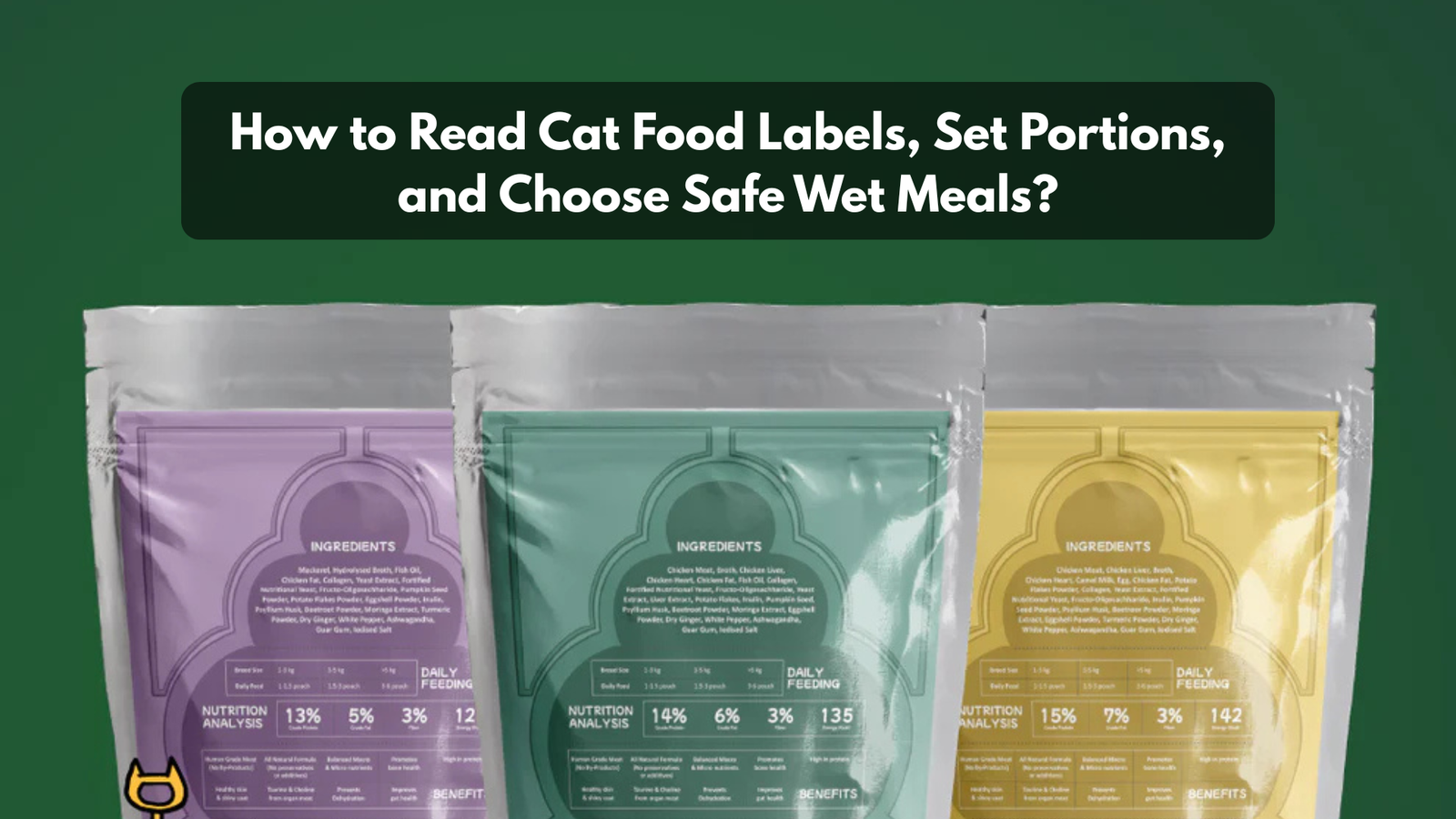
Ignore the marketing on the front. Look for the “Complete and Balanced” statement on the back, which confirms the food meets international (AAFCO/WSAVA) standards. For portions, calculate your cat’s calorie needs (approx. 45-60 kcal per kg of body weight) rather than just guessing “one pouch a day.”
Last Updated: Summer 2026
For “cat food India,” the safest choices are complete and balanced wet meals that disclose a nutritional adequacy statement, list animal-first ingredients, and provide clear kcal per pouch.
The Indian pet food market is flooding with new brands. Some are excellent; others are just fancy packaging with poor nutrition. To navigate this, you need to look past claims like “Grain-Free” or “All Natural” and find the hard data: Calories (Kcal) and Nutritional Adequacy. This guide will teach you exactly how to do that for 3 kg, 5 kg, and heavy 6kg+ cats.
Cat Food Labels: The Big 3 to Verify
A thorough label read starts with the nutritional adequacy statement, then ingredient order, and finally the moisture/kcal information. This ensures safety at any price point.
- 1. Nutritional Adequacy: Look for the phrase “Complete and Balanced.” This means the food can be fed every day forever. If it says “Complementary” or “Topper” (like many broths), it should only be a treat, not the main meal.
- 2. Ingredient Quality: Cats are obligate carnivores. The first ingredient must be meat (e.g., “Chicken,” “Mackerel,” “Duck”). Avoid brands that list “Corn,” “Wheat,” or “Soya” as the first ingredient.
- 3. Calories (Kcal): You cannot guess portions without this. A 70g pouch might have 40 kcal (light broth) or 90 kcal (dense pate). Knowing this number is the only way to prevent obesity.
🧮 The Math of Feeding
Don’t guess. Use this formula for neutered adult cats:
Body Weight (kg) × 45 to 60 = Daily Calories Needed
Example: A 4kg cat needs approx 180–240 kcal per day.
Claims Decoded: Grain-Free, Preservatives, & Fillers
Marketing terms can be confusing. Here is what they actually mean for your cat’s health:
- Grain-Free: Not automatically better. While cats don’t need grains, a grain-free food filled with cheap potato starch isn’t superior. Focus on high protein instead.
- No Preservatives: Wet food is retort-sterilized (cooked in the pouch), so it rarely needs chemical preservatives anyway. This is a standard feature of almost all wet foods, not a unique USP.
- No Fillers/By-products: “By-products” (like liver, heart, kidneys) are actually superfoods for cats, packed with taurine. Don’t fear them! “Fillers” usually refers to excessive corn or wheat gluten used to boost protein numbers cheaply.
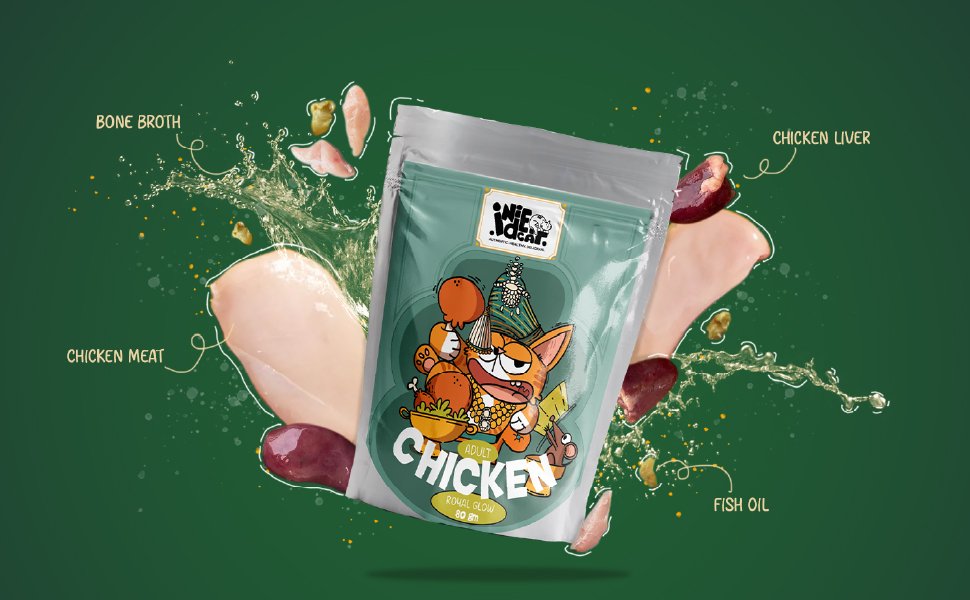
A “Clean Label” Example
Check IndieCat’s label: Chicken is #1. Liver & Heart are listed (natural taurine). No hidden “meat derivatives.” This is what to look for.
Daily Calorie Targets (Reference Ranges)
| Body Weight | Resting Energy (RER) | Active Adult Needs (DER) |
|---|---|---|
| 3 kg (Small/Petite) | ~160 kcal/day | ~190–225 kcal/day |
| 5 kg (Medium/Standard) | ~234 kcal/day | ~280–330 kcal/day |
| 6 kg+ (Large/Chonky) | ~268 kcal/day | ~320–375 kcal/day |
*DER = Daily Energy Requirement. Neutered indoor cats often need less (multiplier of 1.2x), while active outdoor cats need more (1.4x).
Feeding Guide: How Many Pouches?
This is where most pet parents get confused. “One pouch” isn’t a unit of measurement because calories vary. Here is how it translates:
| Cat Weight | If Pouch = 70 kcal (Light Gravy) | If Pouch = 90 kcal (Rich Pate) |
|---|---|---|
| 3 kg | ~3 pouches/day | ~2.5 pouches/day |
| 5 kg | ~4.5 pouches/day | ~3.5 pouches/day |
| 6 kg | ~5 pouches/day | ~4 pouches/day |
Mix Feeding Tip: If you feed dry food too (which is calorie-dense), you must reduce the wet food. For example, 20g of dry food might equal 70–80 kcal—that’s an entire pouch worth of calories!
Safe Wet Meals: What to Prioritize
When choosing a brand in India, prioritize transparency over marketing.
- Life-Stage Specificity: Kittens need “Growth” formulas (higher fat/calcium). Adults need “Maintenance.” Seniors need lower phosphorus. Check the label.
- Moisture Content: In India’s heat, food with 80%+ moisture (like Purrkins Broths) is a safety net against dehydration.
- Manufacturing Standards: Brands that follow FEDIAF or AAFCO guidelines (like IndieCat) adhere to strict safety protocols that generic local fills might skip.
FAQ: Common Label Questions
Is grain-free cat food better in India?
Not inherently. “Grain-free” often just swaps rice for potato. Prioritize “High Meat” and “Complete and Balanced” over the absence of grains.
What does “Complete and Balanced” mean?
It is a regulatory term meaning the food contains every single nutrient (vitamins, minerals, amino acids) your cat needs to survive without any other supplements.
Why does my cat need fewer pouches of pate than gravy?
Pate is denser and contains less water per bite, so it packs more calories. Gravy is water-rich, so you often need to feed a larger volume to get the same energy.
Your Label Checklist (Copy-Ready)
- ✅ Confirm “Complete and Balanced” for the correct life stage.
- ✅ Calculate daily pouches using (Weight × 60) ÷ Kcal per pouch.
- ✅ Ensure the first ingredient is a named animal source (e.g., Chicken, not “Meat Meal”).
- ✅ Transition slowly over 3–7 days to avoid tummy upset.
- ✅ Keep treats to <10% of daily calories.
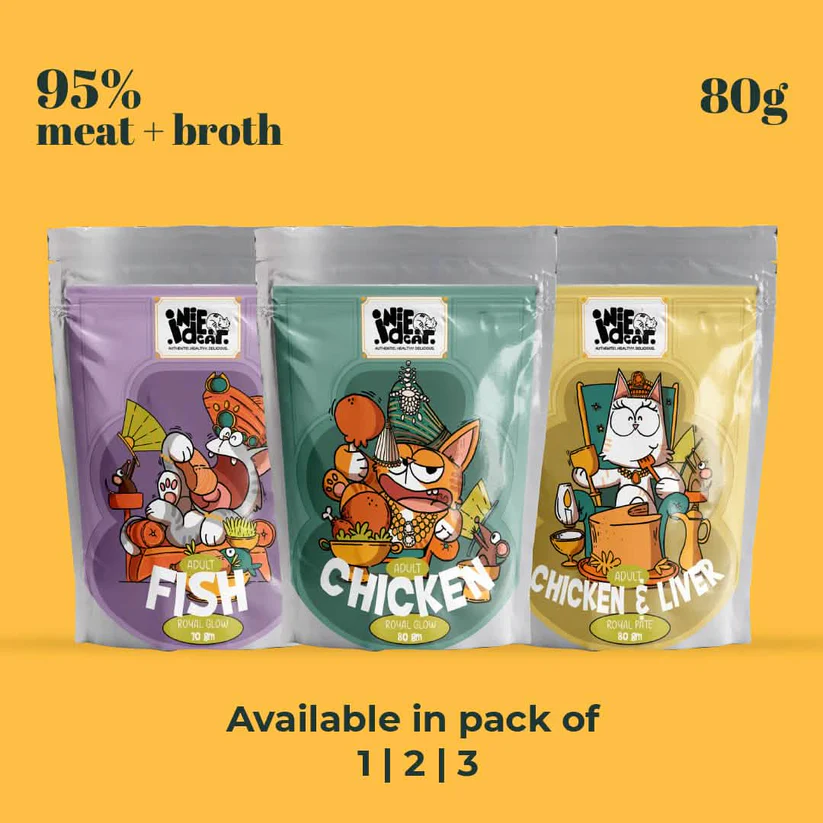
Test What They Love
Not sure which texture your cat prefers? Try our Variety Pack to test Gravy, Pate, and Broth options before committing to a bulk order.