Last Updated: Summer 2026
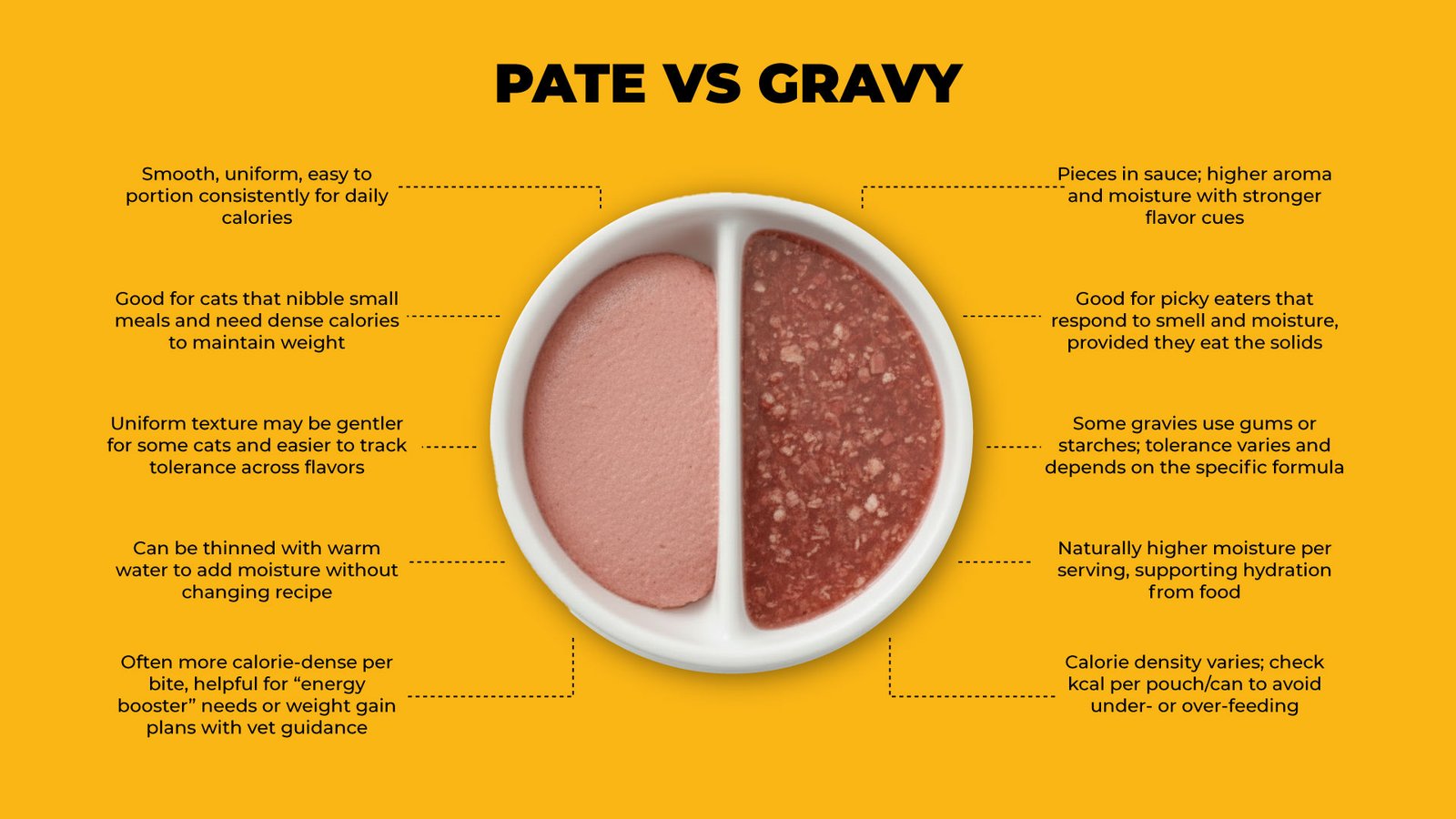
Choosing the right cat food texture—pate vs gravy—is about more than just what your cat likes to eat; it is a decision that impacts their hydration, calorie intake, and dental comfort.
In India’s pet care market, you will find two dominant wet food types: the smooth, loaf-style Pate and the chunky, sauce-heavy Gravy. While marketing often pushes gravy as “gourmet,” veterinary nutritionists look at the metrics: Calorie Density and Moisture Content. For a senior cat losing muscle mass, a dense pate is a lifesaver. For a cat with early-stage kidney issues, the extra water in gravy is medicinal. This in-depth guide breaks down the science of textures so you can choose the format that actually meets your cat’s biological needs.
What is Pate? (The Energy Density Powerhouse)
Pate (pronounced “pah-tay”) is a uniform, finely ground mixture of meat, organs, and broth. Think of it as a savory mousse. Because it contains less “free water” than gravy, it is naturally more calorie-dense per bite.
Why Choose Pate?
- Precision Portioning: Because the texture is uniform, every spoonful has the exact same nutrient profile. This is critical for setting precise portions for weight loss.
- Dental Friendly: Cats with stomatitis (gum inflammation), tooth resorption, or missing teeth often refuse to chew chunks. Pate requires zero chewing—they can simply lap it up.
- No “Leftovers”: Unlike gravy foods where cats pick out the liquid, pate is a homogenized mix. To eat the food, they must eat the meat.
💡 The “Mousse Hack” for Hydration
Don’t avoid pate just because you want hydration. You can easily mash pate with warm water to create a soup. This gives you the best of both worlds: the high protein of pate with the hydration of gravy.
What is Gravy? (The Palatability & Hydration King)
Gravy formulas consist of solid pieces (chunks, shreds, or flakes) swimming in a thickened liquid sauce. This texture mimics the “tear and eat” experience of prey but with added moisture.
Why Choose Gravy?
- Aroma & Appetite: The sauce releases strong meat aromas, which is a powerful trigger for cats with low appetite (e.g., recovering from illness).
- Hydration Support: Gravy foods often have 80-85% moisture. For male cats prone to urinary crystals, this extra fluid intake is protective.
- Texture Variety: Some cats suffer from “food boredom.” The contrast between liquid sauce and solid meat keeps them interested.
⚠️ The “Lick and Leave” Danger
Warning: Many picky cats will lick the delicious gravy and leave the dry meat chunks behind. This is dangerous because the chunks contain the protein, taurine, and minerals. If your cat does this, they are effectively starving themselves of nutrients. Switch to Pate immediately.
Comparison: Pate vs Gravy Metrics
To make an informed decision, compare the metrics that matter to your cat’s biology.
| Feature | Pate (Smooth Loaf) | Gravy (Chunks in Sauce) |
|---|---|---|
| Calorie Density | High. ~90-110 kcal per 85g. Efficient energy delivery. | Moderate. ~70-85 kcal per 85g. Diluted by sauce. |
| Chewing Required | None. Lickable texture. | Yes. Chunks must be chewed. |
| Digestibility | High. Pre-ground texture is easier on the stomach. | Variable. Large swallowed chunks can cause regurgitation. |
| Ideal For | Seniors, Dental Issues, Weight Gain, Syringe Feeding. | Urinary Health, Low Thirst Drive, Picky Eaters. |
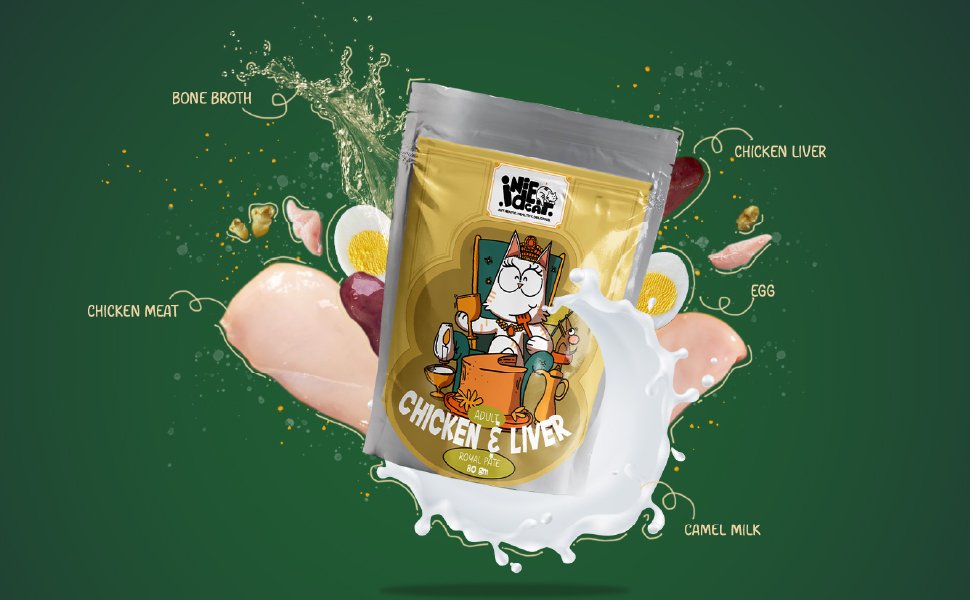
The Energy Booster: Royal Pate
High-calorie, smooth texture designed for seniors and cats who need to regain weight. No chewing required.
Expert Opinion: What Do Vets Say?
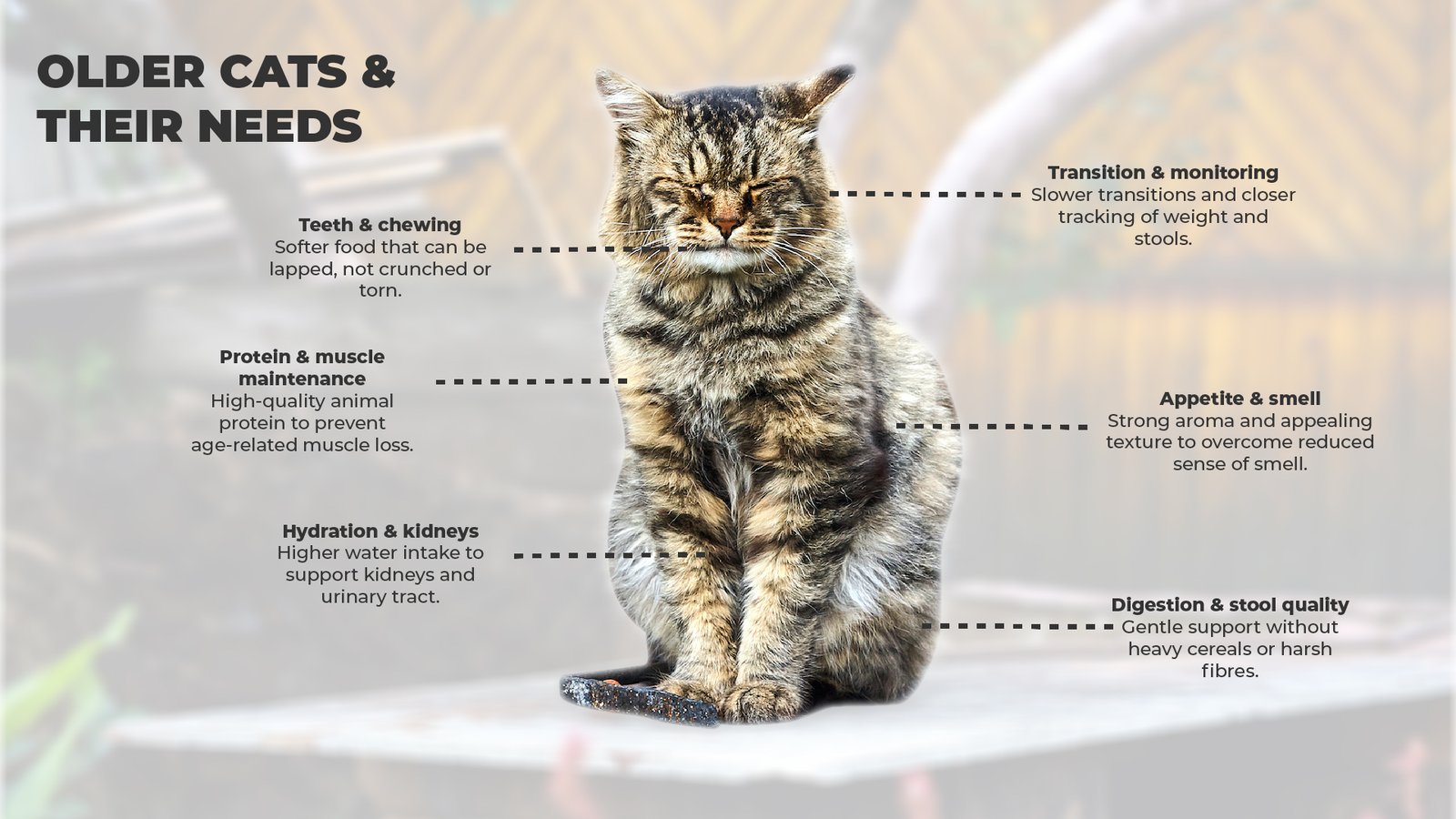
According to the Cornell Feline Health Center, texture is often the deciding factor in palatability. Dr. Martha Cannon, an Oxford-based feline specialist, notes that “Elderly cats often lose their sense of smell and ability to chew simultaneously. For them, a warmed-up pate is often the only way to maintain body condition.”
Conversely, for younger cats prone to cystitis (UTIs), maximizing water intake is the priority. In these cases, vets often prescribe gravy diets specifically to “trick” the cat into drinking more water via their food.
Life Stage Guide: Which Texture When?
| Life Stage / Condition | Recommended Texture | Reasoning |
|---|---|---|
| Kitten (2-12 months) | Rotation (Pate + Gravy) | Expose them to ALL textures now to prevent pickiness later. |
| Adult (1-7 years) | Cat’s Preference | Focus on “Complete & Balanced” status rather than texture. |
| Senior (7+ years) | Pate / Mousse | Dental pain is common. Easier to digest and keeps weight on. |
| Overweight | Pate (Measured) | Easier to weigh precisely. Gravy chunks vary too much in size. |
Special Mention: Broths & Toppers
Apart from complete meals, you will see “Broths” (like Purrkins Chicken Broth). These are neither pate nor gravy—they are hydration supplements. Use them to:
- Top dry food to soften it (for dental issues).
- Encourage drinking on hot summer days.
- Mask the taste of medicine.
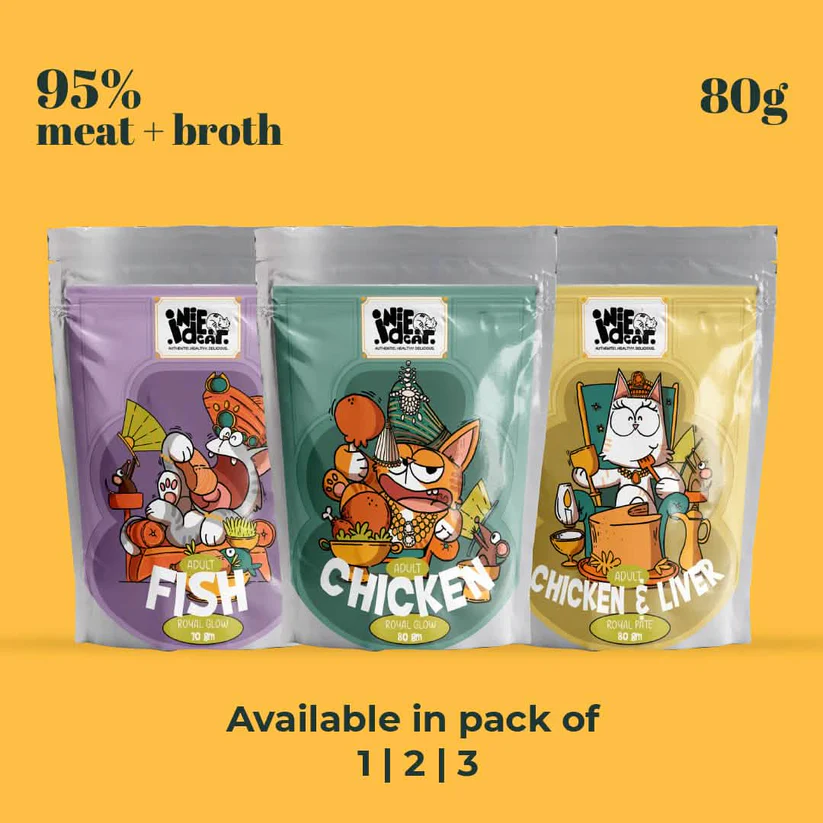
The Texture Test: Try Them All
Unsure if your cat is a “Pate Person” or “Gravy Guru”? Our Variety Pack lets you test all textures before committing to a bulk order.
FAQ: Solving Texture Problems
Which texture is easiest to digest?
Pate is generally easier to digest because the meat is already finely ground. Large chunks in gravy can sometimes be swallowed whole by greedy cats, leading to “scarf and barf” (regurgitation).
Can I mix water into pate?
Yes, and you should! Mixing 1-2 tablespoons of warm water into pate creates a “bisque” or soup. This mimics the hydration of gravy while ensuring your cat eats 100% of the solid nutrients.
My cat only licks the gravy. Is that okay?
No, this is unsafe long-term. The gravy is mostly water and flavoring; the chunks contain the protein and taurine. If your cat does this, switch to a pate or mousse immediately to prevent malnutrition.
Are “Shreds” different from “Chunks”?
Yes. “Chunks” are often formed meat squares (like meatballs). “Shreds” look like pulled chicken. Picky cats often prefer shreds because the texture feels more natural and “prey-like” in the mouth.
Final Checklist: Which Texture Fits Your Cat?
- ✅ For Seniors (7+): Choose Pate. It keeps weight on and hurts less to eat.
- ✅ For Urinary Health: Choose Gravy (or watery Pate) to flush the kidneys.
- ✅ For Picky Eaters: Start with Gravy/Shreds for aroma, but watch for “lick and leave” behavior.
- ✅ For Weight Loss: Choose Pate and weigh it on a scale for precision.
Ultimately, the “best” texture is the one your cat finishes consistently. If you’re struggling with a senior cat who refuses to eat, check our guide on nutrition strategies for senior cats.