Last Updated: Summer 2026
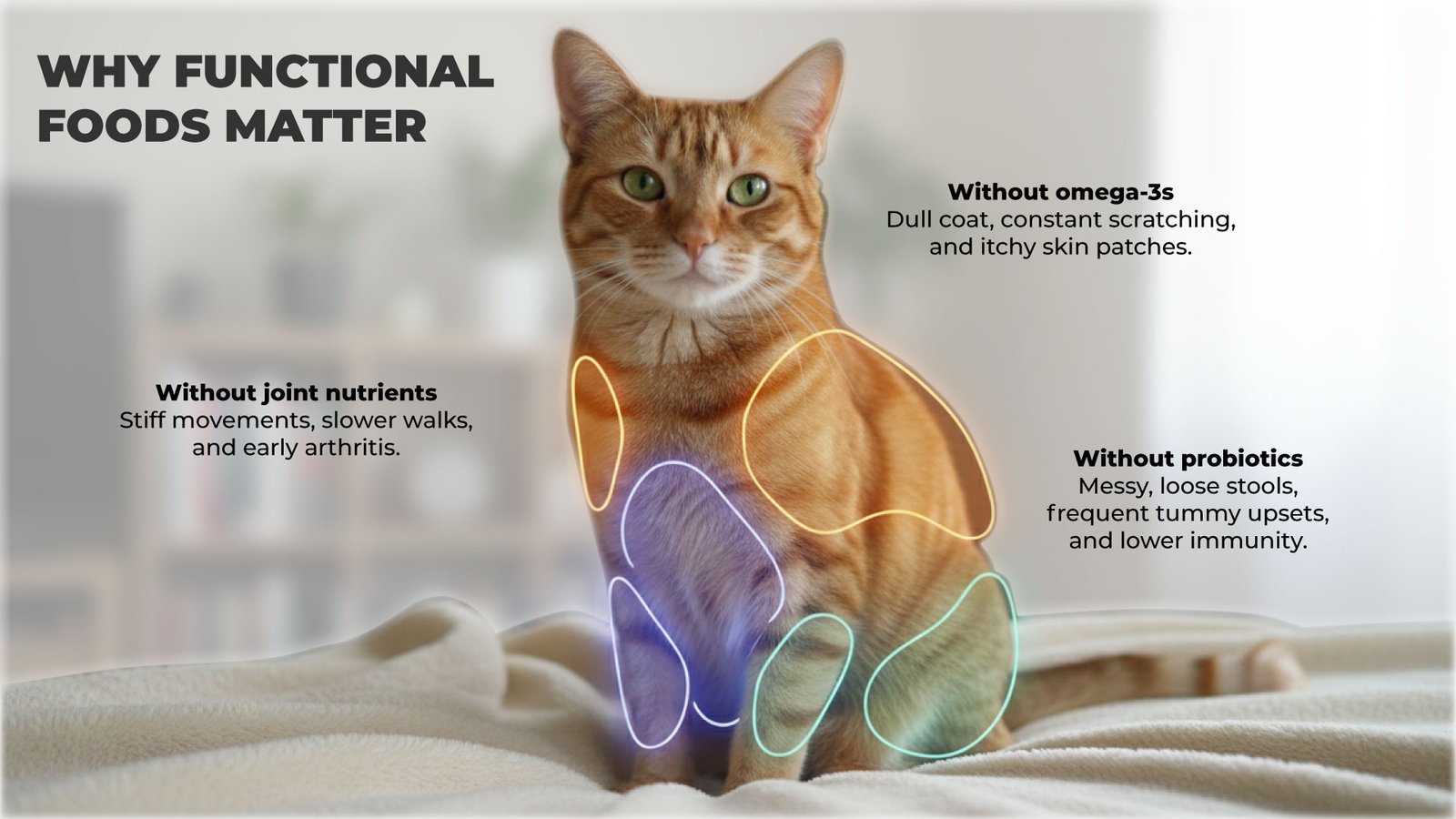
Have you ever noticed your doggo’s tummy rumbling after eating? Or your cat scratching endlessly at her coat? Maybe your senior Indie takes slower walks and struggles with stairs?
You might think these are “normal” signs of aging or sensitive stomachs. But often, they are signs of a nutritional gap. In India, many pets eat standard kibble or home-cooked meals (rice/roti/milk) that provide calories but lack functional nutrition—the bioactive compounds that actually repair the body. As we discussed in our guide on reading pet food labels, ingredients matter more than brand names.
What is “Functional Nutrition”?
Functional foods do more than just stop hunger. They contain specific ingredients that target health issues before they start. The three pillars are:
- Probiotics & Prebiotics: For digestion and immunity.
- Omega-3s: For skin, coat, and brain health.
- Joint Care: For mobility and pain relief.
1. Probiotics: The Gut Health Guardian
70% of your pet’s immune system lives in their gut. Probiotics are “good bacteria” that fight off the bad ones. Without them, pets suffer from loose stools, gas, and poor nutrient absorption.
🥛 Myth Buster: Is Milk a Good Probiotic?
NO. While curd (dahi) has some probiotics, most dogs and cats are lactose intolerant. Regular milk often causes diarrhea, which destroys gut health rather than fixing it. Stick to lactose-free options like bone broth or specific supplements.
Best Sources for Indian Pets
| Source | Benefit | Caution |
|---|---|---|
| Hydrating Broths | Sooths the gut lining and provides moisture. | Ensure it is onion/garlic free (like Purrkins). |
| Sweet Potato / Pumpkin | Prebiotic fiber (feeds the good bacteria). | Must be cooked plain (no spices). |
| Fortified Wet Food | Daily maintenance of gut flora. | Check label for “Complete & Balanced”. |
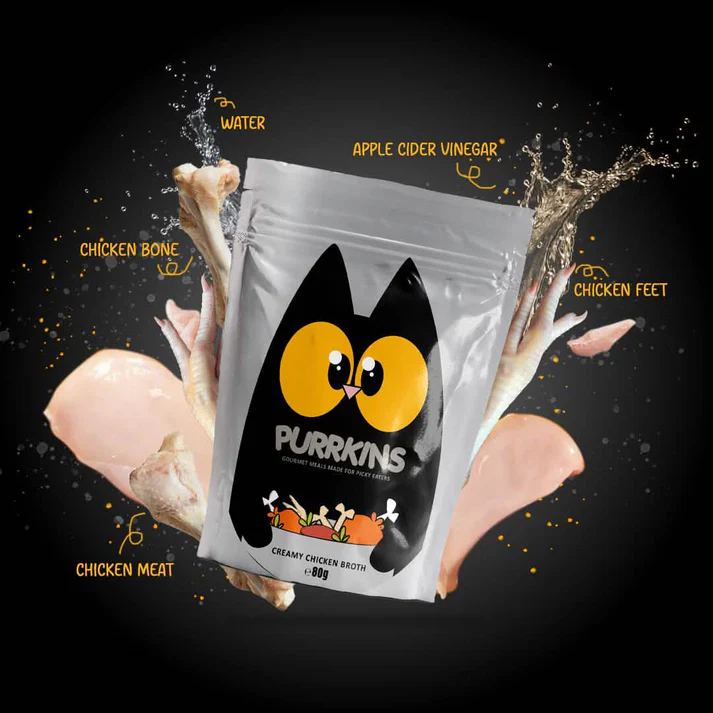
Gut Soother: Purrkins Broth
A gentle, hydrating topper that supports digestion without the lactose risks of milk. Perfect for sensitive tummies.
2. Omega-3s: The Anti-Inflammatory Hero
Omega-3 fatty acids (EPA & DHA) are essential—meaning your pet’s body cannot make them; they must eat them. They are powerful anti-inflammatories that soothe itchy skin and stiff joints. As mentioned in our Senior Cat Nutrition Guide, Omega-3s are critical for aging brains too.
Where to Find Omega-3s?
- Oily Fish: Sardines, Mackerel, Salmon. (Found in IndieCat Mackerel recipes).
- Fish Oil Supplements: Highly concentrated EPA/DHA.
- Algae Oil: A plant-based option for pets allergic to fish.
- Flaxseed: Good for ALA, but less efficient for dogs/cats than fish oil.
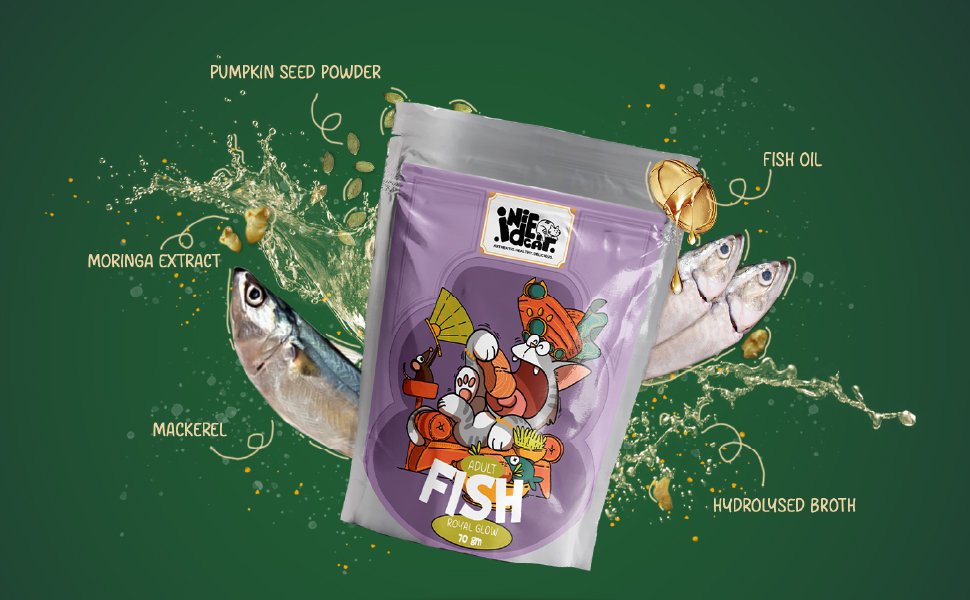
Natural Omega-3s: IndieCat Fish
Packed with Mackerel and fish oil. No need for pills—just feed a species-appropriate diet for a shiny coat.
3. Joint Care: Glucosamine & More
Arthritis doesn’t just happen to old pets. Joint wear and tear starts early, especially in large breeds common in India (Labs, German Shepherds).
Key Nutrients for Mobility
- Glucosamine/Chondroitin: The building blocks of cartilage repair.
- Green-Lipped Mussel: A natural superfood containing powerful anti-inflammatory compounds.
- Turmeric (Curcumin): An Indian kitchen staple! A small pinch of Golden Paste (turmeric + black pepper + coconut oil) is a fantastic natural anti-inflammatory.
Safe Dosing Guide
“Natural” doesn’t mean “unlimited.” Always follow dosing guidelines or consult your vet.
| Nutrient | Maintenance Frequency | Therapeutic Frequency (Vet Guided) |
|---|---|---|
| Probiotics | 2-3 times/week | Daily (during antibiotics or stress) |
| Omega-3s | Daily in food | High-dose oil (for severe skin issues) |
| Joint Support | Daily (Seniors/Large Breeds) | High-dose (Post-surgery or Arthritis) |
Expert Opinion
According to Tufts University Clinical Nutrition Service, the most proven functional ingredients are Omega-3 fatty acids. They note that “dietary changes can sometimes reduce the need for pain medication in arthritic pets.”
FAQ: Functional Food Questions
Can I give my dog human probiotics (Yakult/Curd)?
Human yogurts often contain sugar or xylitol (toxic). Plain homemade curd is okay in small amounts, but pet-specific probiotics are safer and more effective.
Is fish oil safe for cats?
Yes, it is excellent for them! However, ensure it is salmon or sardine oil, not cod liver oil (which can have too much Vitamin A).
How do I know if my pet needs joint supplements?
Watch for difficulty standing up, reluctance to jump, or slowing down on walks. For more on senior signs, read our senior care guide.
Conclusion: Small Additions, Big Difference
Functional nutrition isn’t about replacing your pet’s entire diet; it’s about optimizing it. By adding a gut-soothing broth, switching to a fish-based topper, or sprinkling a little turmeric, you can prevent future vet bills and keep your pet happy, moving, and glowing.
Ready to boost your pet’s bowl? Explore our range of functional foods, from Omega-rich Mackerel to hydrating broths, designed for Indian pets.