Last Updated: Summer 2026
Most pet parents get stuck on the classic debate: wet vs dry cat food? That’s where the focus ends. But cats need more than just choosing between gravy pouches and crunchy bites.
In India’s hot climate, this choice isn’t just about budget—it’s about survival. Cats have a low “thirst drive,” meaning they don’t drink enough water on their own. Relying solely on dry biscuits in a 40°C summer can lead to silent dehydration and future kidney issues. This guide breaks down the science, the costs, and the “Mixed Feeding” strategy that many vets now recommend.
What’s the Real Difference? (Beyond the Price Tag)
It comes down to three things: Moisture, Processing, and Carbs.
💧 The 60% Gap
Dry Food: 10% Water. Like eating crackers.
Wet Food: 70-80% Water. Like eating a fresh meal.
Since cats evolved to get water from prey, wet food is biologically closer to nature.
1. Processing & Ingredients
- Dry (Kibble): Dough is cooked at high heat/pressure (extrusion). To make it stick together, it needs starch (carbs), which cats don’t essentially need.
- Wet (Canned/Pouch): Fresh meats are blended with water and cooked in the sealed container. Usually higher in protein and lower in carbs.
Comparison Table: Pros & Cons
| Feature | Wet Food | Dry Food |
|---|---|---|
| Hydration | Excellent. Flushes kidneys & prevents crystals. | Poor. Requires cat to drink extra water. |
| Carbohydrates | Low (Usually <10%). Better for weight loss. | High (30-50%). Can lead to obesity/diabetes. |
| Convenience | Spoils quickly (30 mins). Needs fridge. | Can be left out all day. Easy storage. |
| Cost | Higher daily cost. | Budget-friendly. |
Myth Buster: Does Dry Food Clean Teeth?
No. Most cats swallow kibble whole or shatter it instantly. It doesn’t “scrub” teeth any more than eating biscuits scrubs yours. As detailed in our Dental Care Guide, only brushing prevents tartar.
The “Mixed Feeding” Solution
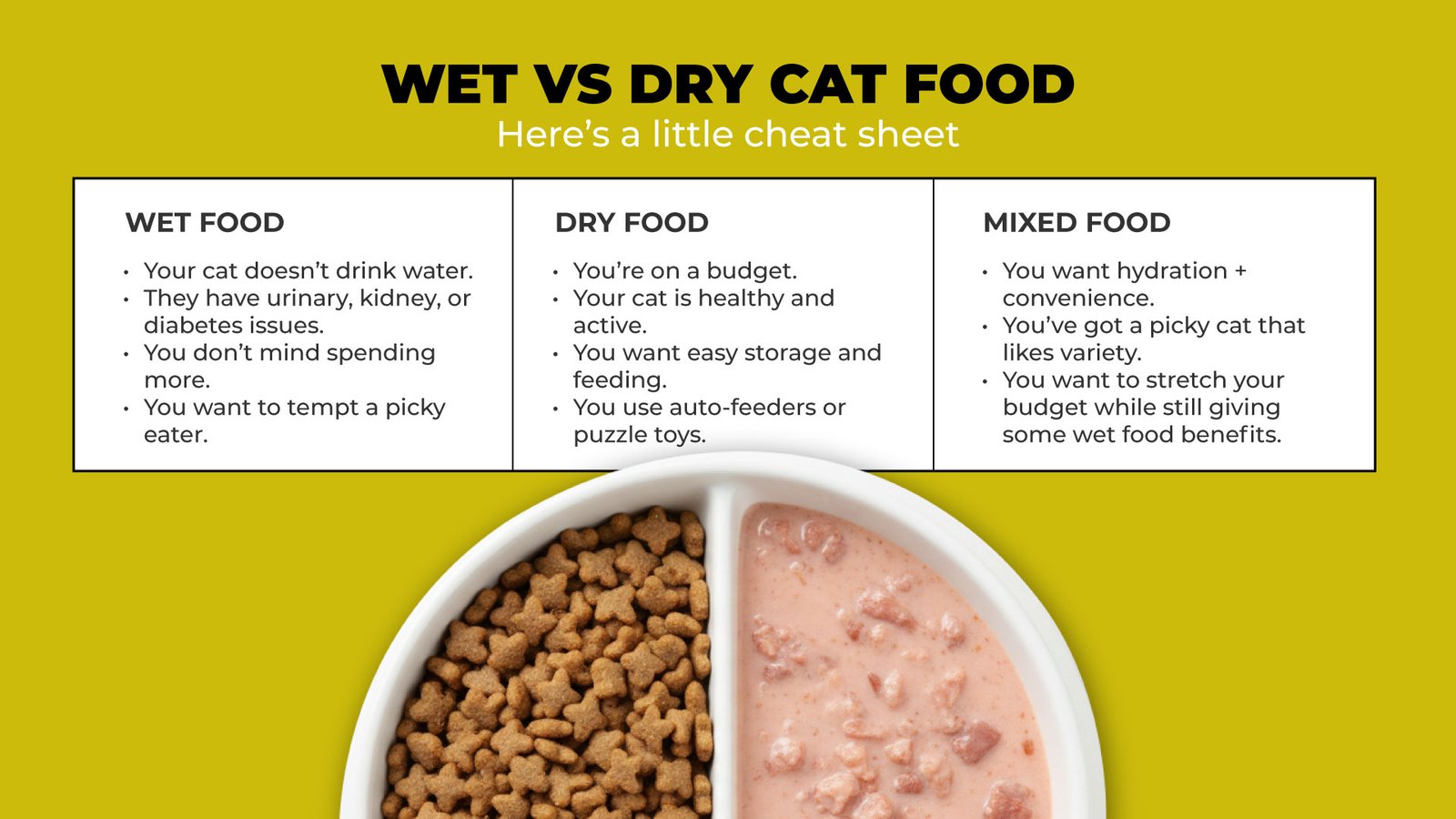
Can’t decide? You don’t have to. Mixed Feeding gives you the hydration of wet food and the convenience/cost-savings of dry.
Sample Schedule for Indian Homes
- Morning (7 AM): Wet Food Pouch (Hydration to start the day).
- Day (Work Hours): Small amount of Dry Food in a puzzle toy (Mental stimulation).
- Night (8 PM): Wet Food Pouch (High protein dinner).
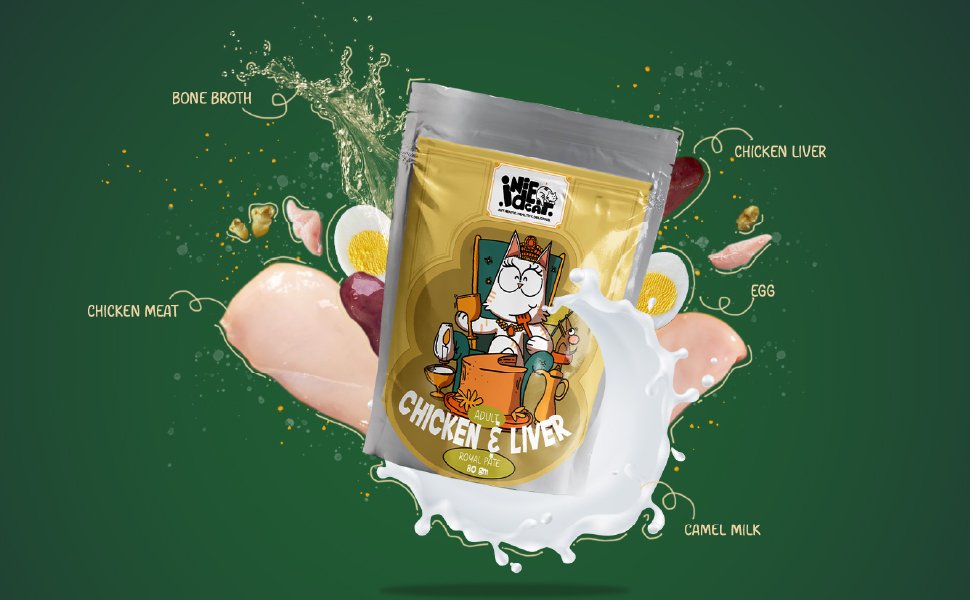
The Hydration Hero: IndieCat Wet Meals
75% Moisture + High Protein. The perfect base for a mixed diet to keep kidneys healthy in Indian heat.
Storage & Safety in India
Our humid climate is an enemy to food freshness.
- Wet Food: Once opened, refrigerate immediately. Use within 24 hours. Never leave in the bowl >30 mins (flies/bacteria).
- Dry Food: Keep in original bag, sealed tight, inside an airtight container. Moisture ruins kibble (fungal growth) even if you can’t see it.
Expert Opinion: Dr. Lisa Pierson
Dr. Lisa Pierson, DVM (CatInfo.org), famously states: “The cheapest wet food is better than the most expensive dry food.” Why? Because even “low quality” wet food provides the water essential for preventing painful urinary blockages.
FAQ: Wet vs Dry Debate
Can I add water to dry food?
Yes, but eat it immediately. Wet kibble breeds bacteria very fast (within 20 mins) in Indian heat. Discard leftovers promptly.
Will an all-wet diet make my cat’s poop loose?
Initially, maybe. Any diet change causes transition issues. But long-term, wet food usually produces smaller, firmer, less smelly stool because the body utilizes more of the protein.
Is dry food really that bad?
Not “bad,” but “risky” if used alone. If you feed only dry, you MUST ensure your cat drinks plenty of water (fountains help). Monitor their urine output closely.
Final Checklist: Making the Choice
- ✅ Kidney/Urinary Issues? 100% Wet Food is non-negotiable.
- ✅ Budget Tight? Feed 50/50 mix. Wet for dinner, Dry for day.
- ✅ Kitten? Expose to wet food NOW. It’s hard to switch them later.
- ✅ Always: Check the label. High protein > Texture type.
Ultimately, the “best” food is the one that is nutritionally complete and that your cat will actually eat. If you’re ready to add more moisture to their diet, check out our guide on Choosing Between Pate and Gravy.