Last Updated: Summer 2026
You didn’t choose the cat. The cat chose you.
It usually starts with a meow outside your window, or a tiny kitten following you home from the market. Adopting an **Indie cat** (the hardy, intelligent native cats of India) is one of the most rewarding experiences a pet parent can have. But let’s be real: taking a cat from the streets into an apartment isn’t just about cuddles. It requires a strategic approach to nutrition, medical safety, and trust-building. This guide covers everything you need to know to turn a wary survivor into a thriving family member.
1. The “Indie” Personality: Why They Are Special
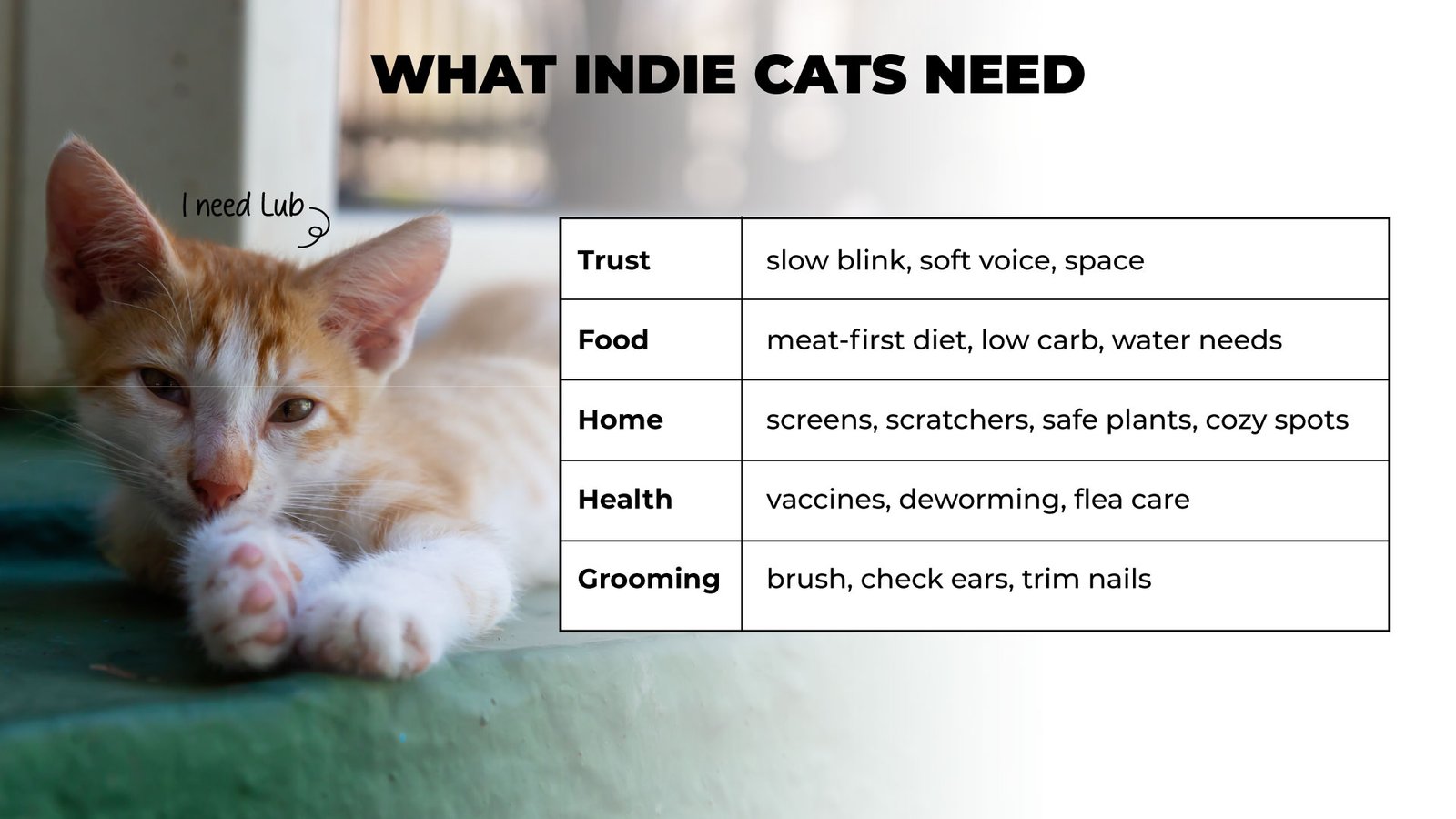
Unlike breed cats bred for passivity, Indies are **survivors**. They are genetically diverse, highly intelligent, and have strong hunting instincts. They don’t demand attention; you have to earn it.
- High Energy: They need vertical space (shelves, cat trees) to climb.
- Street Smarts: They are cautious initially but bond deeply once they feel safe.
- Immunity: Generally hardier than Persians or Siamese, but they often come with “street baggage” (worms/fleas).
2. Nutrition: Reversing “Street Malnutrition”
On the streets, cats eat whatever they find: biscuits, stale roti, rice, and garbage. This keeps them alive, but it doesn’t keep them healthy. Most rescued Indies are protein-deficient.
🚫 The Roti & Milk Myth
Stop feeding Roti and Milk. Cats are Obligate Carnivores. They cannot digest the wheat in roti efficiently, and milk often causes diarrhea (dehydration). They need Meat to repair their bodies.
The “Street-to-Home” Diet Switch
| Nutrient | Street Diet (Bad) | Home Diet (Good) |
|---|---|---|
| Protein | Low (Scraps/Bugs) | High (Chicken/Fish). Essential for muscle repair and fur growth. |
| Carbs | High (Bread/Rice) | Low (<10%). Prevents the “Indie potbelly” (often caused by worms + carbs). |
| Hydration | Dirty puddle water | Wet Food & Fresh Water. Flushes out toxins. |
To understand why protein is non-negotiable, read our Guide to Cat Food Labels.
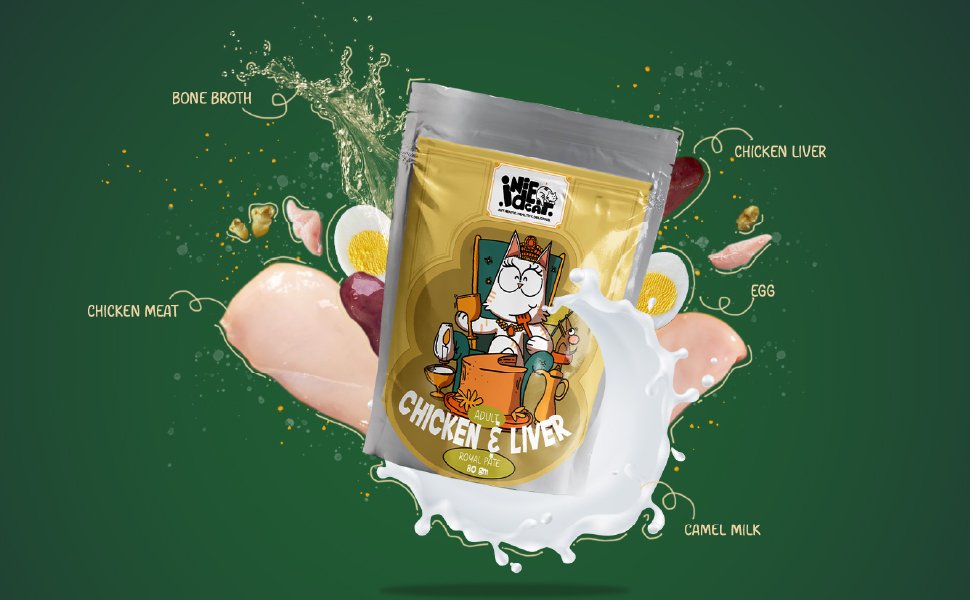
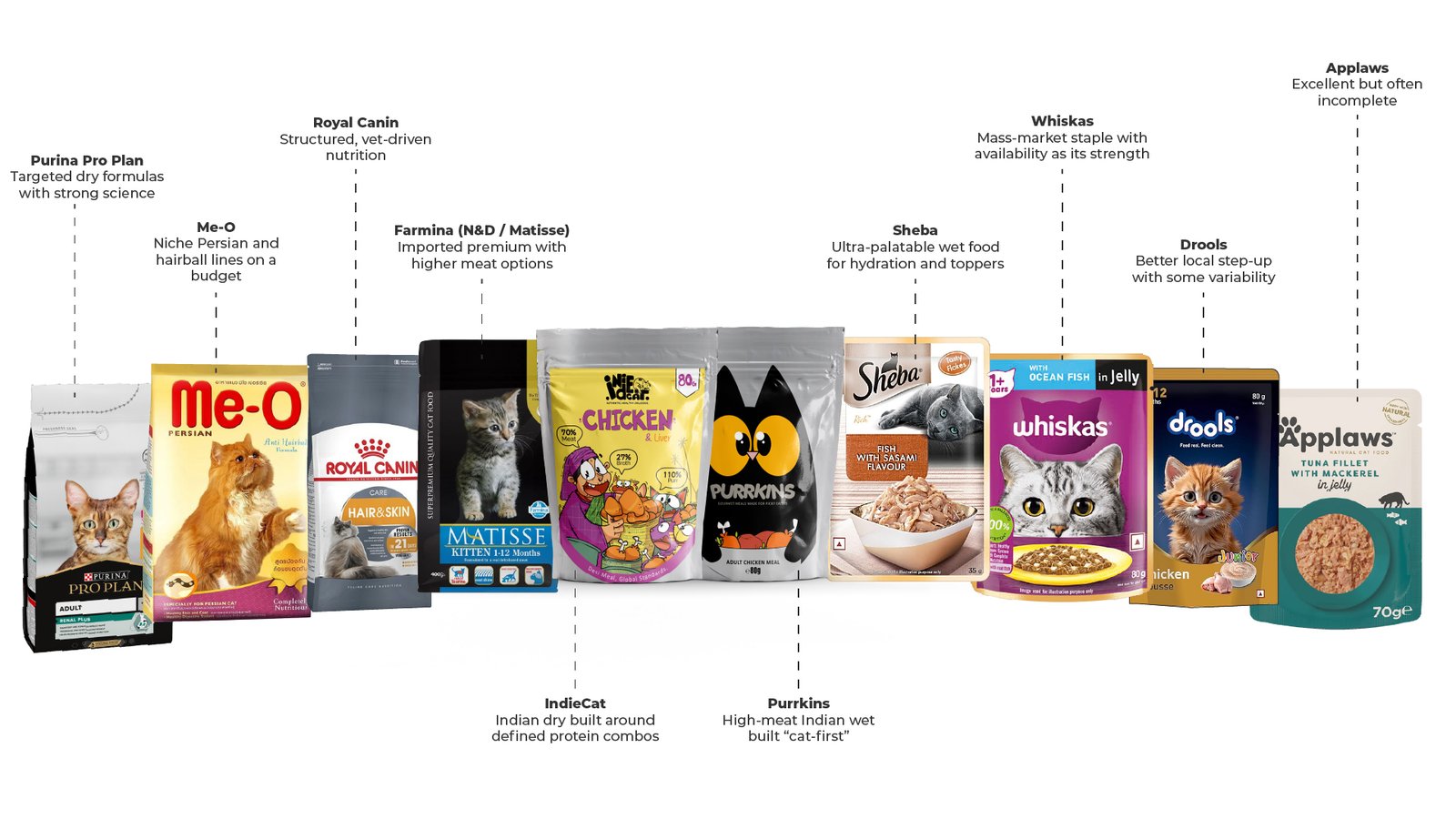
The Muscle Builder: IndieCat Chicken
High-protein wet food to help rescue cats regain muscle mass and healthy fur. Grain-free and biologically appropriate.
3. Medical Protocol: The First 48 Hours
Before you let the new cat roam your house (especially if you have other pets), you need a medical pitstop.
- Isolation: Keep the cat in a separate room/bathroom for 7-10 days. This prevents the spread of fleas or unknown viruses to other pets.
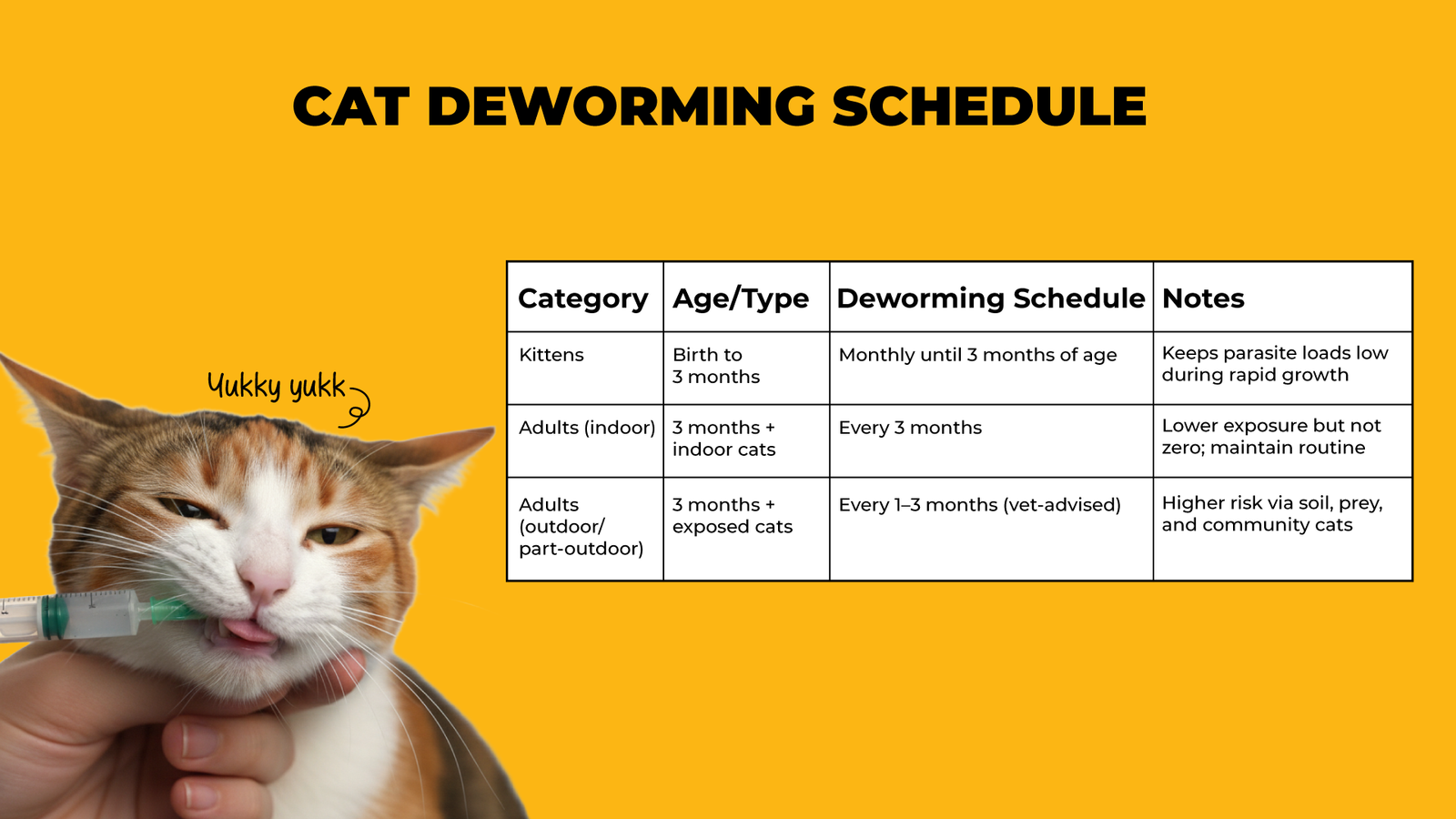
- Deworming: Street cats always have worms. A deworming course is mandatory.
- Vaccination: Tricat (Anti-Rabies + FVRCP) is essential. See our Vaccination Schedule for dates.
- Spot-On Treatment: For ticks and fleas. Do NOT bathe a new cat immediately; it’s too stressful. Use a spot-on instead.
4. The “3-3-3 Rule” of Socialization
Indie cats need time to decompress. Do not force affection. Follow this timeline:
⏳ The 3-3-3 Rule
- 3 Days: To Decompress. They may hide, refuse to eat, or hiss. Give them space.
- 3 Weeks: To Learn Routine. They start exploring, eating well, and understanding you aren’t a threat.
- 3 Months: To Feel at Home. True personality emerges. They begin to trust and play.
5. Creating a “Cat-Proof” Indian Home
Indies are escape artists. To keep them safe:
- Balcony Netting: Essential in high-rise apartments. “Pigeon nets” or sturdy nylon mesh prevent fatal falls.
- Litter Box: Indies are naturally clean. Show them the litter box once, and they usually get it. Follow the N+1 Rule.
- Hiding Spots: Give them a cardboard box. It makes them feel secure.
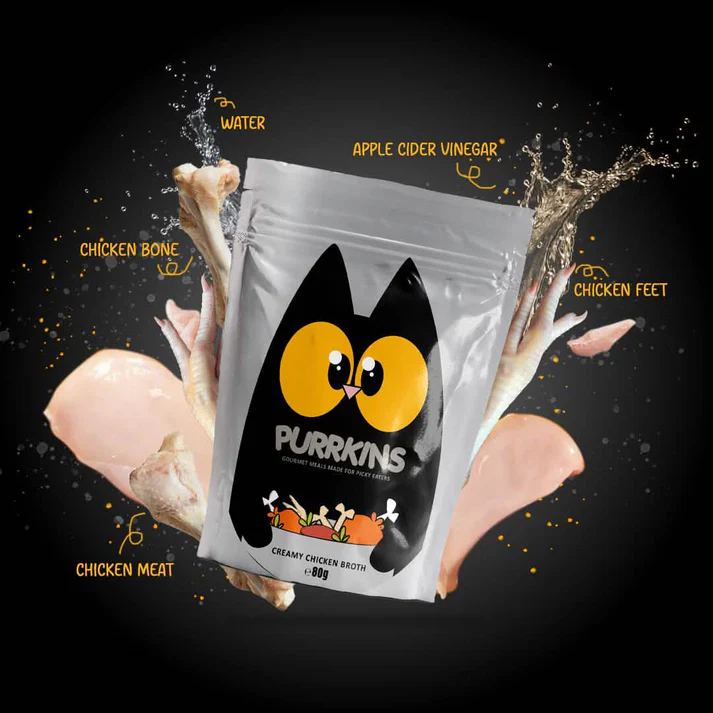
The Trust Builder: Purrkins Treats
Hand-feeding treats is the fastest way to earn a rescue cat’s trust. Use these creamy snacks to say “I love you.”
FAQ: New Pet Parent Questions
Should I bathe my rescued cat immediately?
No! They are already terrified. Bathing can cause trauma or bites. Use waterless foam or wet wipes first. Wait until they trust you (3+ weeks) before a full bath.
Can I let my Indie cat go outside?
It is safer to keep them indoors. Streets have dogs, traffic, and diseases. A balcony with safety netting gives them fresh air without the danger.
My rescue cat won’t eat. What do I do?
Stress kills appetite. Try strong-smelling wet food (like mackerel). Warm it up slightly. Leave them alone in the room to eat in private.
Final Thoughts
Adopting an Indie is a journey from wary stranger to loyal companion. They may not be lap cats on Day 1, but with good food (Meat > Roti!), patience, and safety, they become the most grateful family members you’ll ever have.